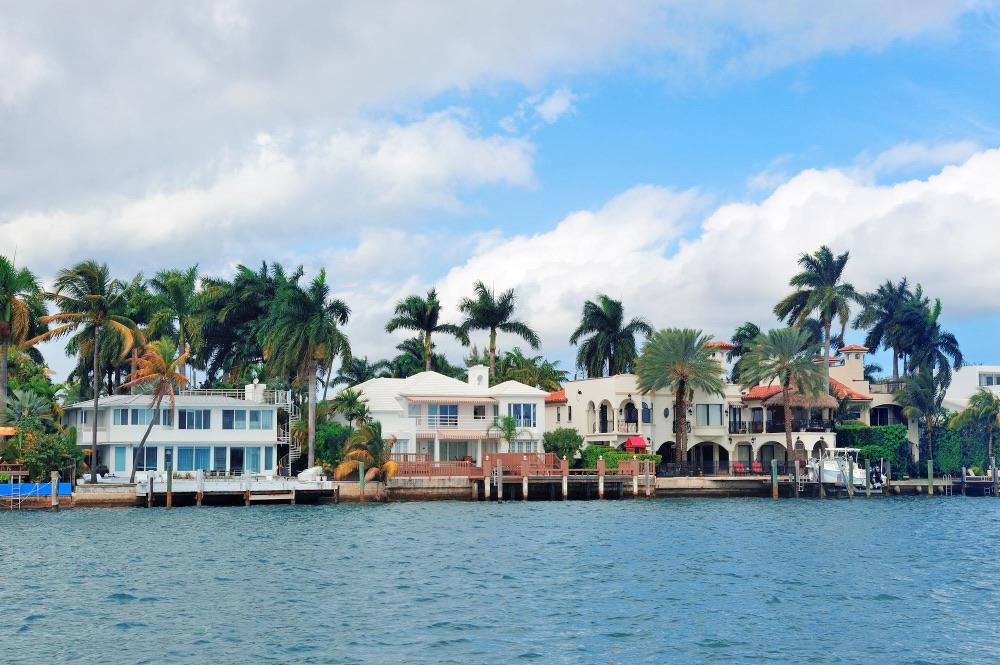

Florida can be a financially attractive retirement destination, but the absence of state income tax does not tell you how much you need to save. A paid-off home in an inland community, a rented apartment near Tampa, and a condominium near the coast can produce very different monthly bills. Your Social Security benefit, pension, medical coverage and housing choices matter more than a single statewide savings target.
For an initial planning exercise, consider monthly household budgets of $3,000, $4,500 and $6,000, then compare each with your reliable income. These are illustrative spending targets, not measured Florida averages or guaranteed standards of comfort. A household with $3,000 in monthly income and $4,500 in expenses needs another $1,500 each month. At an assumed initial withdrawal rate of 4%, that gap translates into $450,000 of investable savings, before any additional reserves or taxes not included in the budget.
This guide uses published 2027 federal benefit and Medicare parameters available November 28, 2026. Housing and household spending examples are transparent planning assumptions. Replace them with your own quotes before committing to a move, and use the complete Florida retirement guide to coordinate the budget with taxes, housing and relocation decisions.
How much income do you need to retire in Florida?
Start with spending rather than a round-number portfolio goal. The following examples describe three hypothetical households. Each includes an allowance for federal taxes, even though an actual household may owe more or less. There is no Florida individual income tax, but that does not eliminate other expenses.
| Monthly expense | Single, paid-off home | Single, renting | Couple, homeowner |
|---|---|---|---|
| Rent or ownership costs* | $700 | $1,650 | $1,850 |
| Utilities and communications | $250 | $250 | $350 |
| Food and household goods | $450 | $500 | $750 |
| Transportation | $400 | $450 | $650 |
| Healthcare | $450 | $500 | $850 |
| Leisure and personal spending | $250 | $450 | $600 |
| Irregular expenses and reserves | $350 | $500 | $650 |
| Federal tax allowance | $150 | $200 | $300 |
| Total monthly budget | $3,000 | $4,500 | $6,000 |
| Annual budget | $36,000 | $54,000 | $72,000 |
*Ownership costs include assumed property taxes, insurance, association fees where applicable and routine maintenance; the couple's example may include a mortgage payment. Utilities are shown separately. The renter's figure is base rent. Healthcare includes Part B where applicable. Irregular reserves cover other infrequent spending, not a second allowance for routine home maintenance.
These are constructed examples, not a survey. A single homeowner could easily spend more than the couple if the property needs expensive repairs or the person requires substantial care. Conversely, a couple sharing transportation and housing can sometimes live on considerably less than two separate households.
Takeaway: the most useful budget is the one you can reproduce with actual bills. Do not treat $3,000 as a minimum that applies to every retiree or $6,000 as a universal definition of comfort.
Calculate your retirement savings target
Separate reliable recurring income from withdrawals that depend on your assets. Social Security and an existing monthly pension belong in the first category. An investment account balance belongs in the second. A possible future inheritance, occasional gifts and an unconfirmed pension estimate should not be treated as dependable payments.
Use this simple calculation:
- Add up expected monthly expenses, including taxes and health premiums.
- Subtract gross monthly recurring income if those deductions are included as expenses. Alternatively, use net deposits and omit deductions already taken from them.
- Multiply the remaining monthly gap by 12.
- Divide the annual gap by an illustrative initial withdrawal rate expressed as a decimal.
| Monthly income gap | Annual gap | At 3% | At 3.5% | At 4% |
|---|---|---|---|---|
| $500 | $6,000 | $200,000 | $171,429 | $150,000 |
| $1,000 | $12,000 | $400,000 | $342,857 | $300,000 |
| $1,500 | $18,000 | $600,000 | $514,286 | $450,000 |
| $2,000 | $24,000 | $800,000 | $685,714 | $600,000 |
| $3,000 | $36,000 | $1,200,000 | $1,028,571 | $900,000 |
The results are rounded to the nearest dollar. The rates illustrate sensitivity, not a promise of sustainable withdrawals. A withdrawal rate is the portion of a portfolio withdrawn, not the return that the portfolio is expected to earn. Actual outcomes depend on investment performance, fees, inflation, longevity and spending flexibility.
For example, an extra $300 of recurring monthly insurance costs raises the annual gap by $3,600. At 4%, the equivalent additional portfolio target is $90,000. That is why comparing housing and insurance quotes can be just as important as comparing retirement account balances.
Try the RetireToday retirement calculator to explore your savings timeline. Keep your assumptions consistent with the spending figures used here and check whether the calculator expresses future amounts in current or future dollars.
How far does Social Security go in Florida in 2027?
The Social Security Administration's 2027 fact sheet estimates a January benefit of $2,170 per month for the average retired worker and $3,355 for an aged couple with both receiving benefits. The 2027 cost-of-living adjustment is 3.6%, also documented in the Federal Register notice.
These are national estimates, not Florida-specific payments or an entitlement for a new claimant. Your earnings record and claiming age determine your own benefit. A household with only one recipient should not use the two-recipient figure. Review your individual estimate and check when each payment will actually start.
| Monthly budget | Illustrative monthly Social Security | Remaining monthly gap | Portfolio at 4% |
|---|---|---|---|
| $3,000 single | $2,170 | $830 | $249,000 |
| $4,500 single | $2,170 | $2,330 | $699,000 |
| $6,000 couple | $3,355 | $2,645 | $793,500 |
This table uses gross benefits, and the budgets include healthcare and tax allowances. If Medicare premiums are already deducted from the amount you enter as income, remove the matching expense from the budget. Otherwise you count the same expense twice.
A monthly pension can materially change these results. For instance, adding a $1,000 pension to the $4,500 single-person example reduces the monthly gap to $1,330, equivalent to $399,000 at 4%, assuming the existing tax allowance remains sufficient. Recalculate federal tax whenever income changes.
Can you retire in Florida with $500,000 or $1 million?
The answer depends on the gap your investments need to cover, not the balance alone. The following table converts investable assets to an illustrative first-year monthly withdrawal, before tax.
| Investable assets | At 3% | At 3.5% | At 4% |
|---|---|---|---|
| $250,000 | $625 | $729 | $833 |
| $500,000 | $1,250 | $1,458 | $1,667 |
| $750,000 | $1,875 | $2,188 | $2,500 |
| $1,000,000 | $2,500 | $2,917 | $3,333 |
A single person receiving $2,170 in Social Security with $500,000 invested would have approximately $3,837 a month at an initial 4% withdrawal rate. That exceeds the first illustrative budget but falls short of the $4,500 rental budget by about $663. A couple receiving $3,355 and owning $1 million of investments would have approximately $6,688 before taxes and premiums. Their $6,000 illustrative budget leaves a margin of about $688, provided its tax allowance is adequate.
Neither result establishes that the portfolio will last. In a poor market, selling assets to fund fixed expenses can reduce the capital available when markets recover. Early retirement, a long life and rising healthcare costs can make the same starting balance less resilient. A paid-off home is not an investment account available for withdrawals unless you actually arrange to access its equity. Do not count both the full home value as investable savings and the benefit of living there without rent.
Housing costs: compare locations and ownership types
Housing is one of the most consequential decisions in a Florida retirement budget. Instead of selecting a location from a statewide average, compare the same bedroom count and housing type across several communities. The HUD FY 2026 Fair Market Rent schedule offers a dated federal benchmark for selected areas.
| HUD rental area | FY 2026 one-bedroom FMR | FY 2026 two-bedroom FMR |
|---|---|---|
| Sebring | $1,006 | $1,271 |
| Wildwood–The Villages | $1,139 | $1,328 |
| Tallahassee | $1,204 | $1,352 |
| Tampa–St. Petersburg–Clearwater | $1,696 | $1,977 |
| West Palm Beach–Boca Raton | $1,901 | $2,254 |
Fair Market Rent is a housing-program benchmark for gross rent, not an average asking rent, a guaranteed available unit or a retirement community price. Gross rent generally incorporates tenant-paid utilities other than certain communication services. These figures are FY 2026 data, not verified FY 2027 values. Use them for geographic context, and obtain current lease quotes and utility terms for your move.
The difference between the one-bedroom benchmarks for Sebring and West Palm Beach is $895 per month. If an otherwise identical retirement budget changed by that amount, the annual gap would change by $10,740, equivalent to $268,500 at 4%. Actual differences will also include transport, insurance, medical access and lifestyle.
Buying versus renting
For an owner, a mortgage-free home still requires money. Build a monthly ownership estimate from the property tax bill expected after purchase, a homeowners insurance quote, any separate flood coverage, association dues, maintenance and mortgage principal and interest if applicable. Ask which costs are included in an escrow payment so they are not counted twice.
For a condominium, inspect the association's financial statements, current budget, reserve information and known assessments. A low advertised purchase price may not compensate for a high monthly fee or substantial future repair obligations. An assessment that has not yet been formally billed can still affect your decision if documents identify a funding shortfall.
Renters should compare renewal terms, deposits, parking, utilities, accessibility and the cost of another move. A shorter lease can reduce the risk of buying in an unfamiliar area, but temporary housing and moving twice also have costs. Consider these trade-offs using written quotes, not a rule that renting or buying is always cheaper.
Florida taxes, insurance and storm-related costs
Florida does not impose an individual income tax. Its general state sales tax is 6%, and local surtaxes can apply to taxable purchases. See the Florida Department of Revenue sales tax guide and our Florida retirement tax guide for the distinction between federal and state obligations.
A move can reduce income taxes without reducing total spending. Suppose your former state's actual income tax was $2,400 a year, but your new home costs $350 more per month to insure and maintain. The $200 monthly tax saving is more than offset by the higher housing expense, leaving you $150 worse off each month.
Property tax exemptions can help eligible homeowners, but do not use a seller's existing tax bill as your own forecast. Ask the county property appraiser for a purchase-specific estimate and confirm eligibility for available exemptions. Our Florida homestead exemption guide and senior property tax exemption guide discuss those rules separately.
Insurance also deserves a property-specific estimate. Compare coverage limits, exclusions, deductibles and whether flood coverage must be purchased separately. An annual premium is not the maximum amount you could spend after a storm. Consider the deductible you could owe, temporary accommodation, travel and expenses that the policy does not reimburse. A cash reserve earmarked for such events should not automatically be included in the portfolio that funds normal retirement withdrawals.
Healthcare costs before and after age 65
For 2027, CMS Medicare guidance sets the standard Part B premium at $209.40 monthly and its annual deductible at $292. Two people each paying the standard premium spend $418.80 per month, or $5,025.60 per year, on Part B alone. Some beneficiaries pay more based on income. Premium-free Part A eligibility is common but is not universal.
These figures are not total healthcare costs. Include prescription coverage, supplemental or Medicare Advantage premiums where applicable, copayments, dental care, vision expenses and uncovered services. The CMS Florida plan landscape shows that plans with no additional Medicare Advantage premium are available in Florida. A zero additional plan premium does not remove the Part B obligation or guarantee zero medical spending.
If you retire at 60 rather than 65, the health coverage gap needs its own budget. The Florida retirement health insurance and Medicare guide explains the coverage timeline before and after age 65. Obtain a quote based on the actual household, location and expected income. Do not use the Medicare premium as a substitute for a pre-Medicare insurance quote. A younger spouse may need separate coverage after the older spouse enrolls in Medicare.
For illustration, a temporary additional health expense of $600 per month for five years totals $36,000 before inflation. That is a finite bridge cost, unlike a permanent monthly gap. Modeling it separately helps avoid treating a temporary cost as a lifelong expense, while still ensuring that money is available when needed.
Long-term assistance with daily activities is another distinct risk. Ordinary medical insurance is not a comprehensive funding plan for extended custodial care. Think about what family assistance is realistically available, whether your home can be adapted, and how care would be funded if both spouses need help at different times.
Build in inflation, emergencies and survivor income
A budget that works in 2027 must also work in later years. Consider a $4,500 monthly spending target. If all costs increased at an assumed 3% each year, the equivalent monthly amount would reach about $6,048 after ten years and $8,128 after twenty. This is an illustration of compounding, not a forecast of inflation.
Social Security adjustments help address inflation, but the increase in benefits does not necessarily match the increase in your personal expenses. A pension may have different adjustment rules or none. Housing insurance, medication and association costs may change at rates very different from a broad consumer price index.
Separate three kinds of reserves: known near-term costs such as relocation, irregular but predictable replacement costs such as a vehicle, and unexpected expenses. A $4,500 monthly budget with a six-month reserve assumption implies $27,000 of accessible funds. That is an example, not a universal reserve requirement. Avoid adding the same funds to both the dedicated reserve and the investable portfolio used for income generation.
Couples should also model a surviving spouse's budget. Two Social Security payments generally do not continue in full after one spouse dies; the survivor's own eligibility and benefit rules matter. Pension continuation depends on the option selected. Housing costs may barely change even when food and travel expenses decline. An apparently comfortable joint income can become insufficient for one person. Request a survivor estimate from each benefit provider and calculate that budget independently.
How to compare a Florida retirement budget with your current state
A useful comparison starts with your existing spending records. Take the last twelve months of expenses and remove items that will disappear after the move, such as commuting or a mortgage that will be paid off at closing. Then add the costs that will replace them. Do not remove an expense simply because it is inconvenient to estimate. If you plan to visit relatives outside Florida several times a year, include the tickets, accommodation and ground transportation in the annual budget.
Consider a household that currently spends $4,800 monthly. It expects to save $200 on state income taxes and $400 on housing, but to spend $250 more on insurance and $150 more on travel. The net change is a reduction of $200, producing an estimated Florida budget of $4,600. If the household has $3,400 in recurring income, its investment-funded gap is $1,200 per month, or $14,400 annually. At an illustrative 4% rate, the associated portfolio target is $360,000. All figures in this example are assumptions, not a comparison of actual state averages.
Moving costs also deserve separate treatment. Suppose the household sets aside $15,000 for moving, temporary lodging and furnishing. That one-time amount should not be multiplied by 25 as if it recurred annually. Instead, subtract it from available assets before evaluating the portfolio that will supply ongoing income. If the household begins with $400,000 in liquid assets, spending that $15,000 leaves $385,000 before other dedicated reserves. At the assumed 4% rate, the first-year withdrawal would be $15,400, just $1,000 more than the annual gap. That narrow margin is a reason to examine the stress case rather than declaring the move affordable.
A practical readiness test before moving
Write down three candidate housing addresses and obtain realistic costs for each. For each location, identify grocery access, medical providers and travel requirements. A lower rent can be offset by a second car or inconvenient access to specialist care. Next, record your actual Social Security estimate, pension start date, expected tax withholding and available account balances. Separate money designated for the move from money that must support long-term spending.
Create a baseline budget and a stress budget. For the stress case, increase housing or medical expenses, remove any uncertain income and model a lower initial withdrawal rate. A household with a $1,500 monthly baseline gap needs $450,000 at 4%; if the gap becomes $2,000 and the assumed rate falls to 3%, the equivalent target becomes $800,000. This comparison explains why a plan that barely works under favorable assumptions may need another source of flexibility.
Finally, check the months before recurring benefits begin. A household spending $4,500 with no income for six months needs $27,000 for that interval. If a pension or benefit starts later than expected, the bridge may become longer. Keep the payment schedule separate from a long-term average so that a positive annual cash flow does not conceal a short-term shortage.
Frequently asked questions
Is $3,000 a month enough to retire in Florida?
It can cover the illustrative paid-off-home budget in this guide, but a renter or a household with larger medical bills may need more. Compare your actual housing, taxes, health costs and reserves.
Can I retire in Florida on Social Security alone?
Some households may be able to do so with low expenses or additional assistance. The national estimated average retired-worker benefit for January 2027 is $2,170, below all three illustrative budgets in this guide. Use your own benefit estimate.
Is $500,000 enough to retire in Florida?
At an illustrative 4% initial withdrawal rate, $500,000 provides about $1,667 per month before tax. Whether that is enough depends on the gap between recurring income and expenses, as well as how long the assets must last.
How much does a retired couple need per month?
The homeowner couple example uses $6,000 per month, including taxes, healthcare and reserves. It is a scenario rather than a statewide average. Actual expenses can be higher or lower.
Does Florida's lack of income tax make retirement cheap?
Not necessarily. Federal income taxes, property taxes, sales taxes, insurance and housing expenses remain relevant. Compare the complete household budget with your current location.
How much should I budget for Medicare in 2027?
The standard Part B premium is $209.40 per person per month. Your total healthcare budget must also account for other coverage, cost sharing and services not covered by your plan.
Should I count my home toward my retirement savings target?
Home equity is part of net worth but is not automatically spendable investment capital. Count only proceeds you actually plan to make available after housing and transaction costs.
Official sources and editorial note
- SSA: 2027 COLA fact sheet
- Federal Register: 2027 Social Security determinations
- CMS: 2027 Medicare premiums and deductibles
- CMS: 2027 Part B premium rates
- CMS: 2027 state plan landscape
- HUD: FY 2026 Fair Market Rent schedule
- Florida DOR: sales and use tax
Reviewed November 28, 2026. This guide is educational, not individualized investment, tax or insurance advice. Budget amounts, withdrawal rates, inflation assumptions and reserve amounts are original illustrative scenarios, not official cost-of-living estimates. No professional reviewer is claimed.